


What Size Shed Do I Need? A Practical Guide for NSW Property Owners
Most people building a shed underestimate how much space they actually need. It's one of the most consistent patterns in this industry: clients who build a shed, use it for two years, and wish they'd gone bigger. Getting the size right before you build is worth the effort, and in most cases the incremental cost of going one size larger is far less than building a second shed later.
Common Use Cases and Size Recommendations
Single car garage. A minimum footprint for a single car with no workspace is roughly 6m x 3.6m. In practice a 6m x 6m design gives you room to work around the vehicle, store tools along one wall, and not feel cramped every time you open the car door. If you also want to park a trailer, boat, or ride-on mower, add more length.
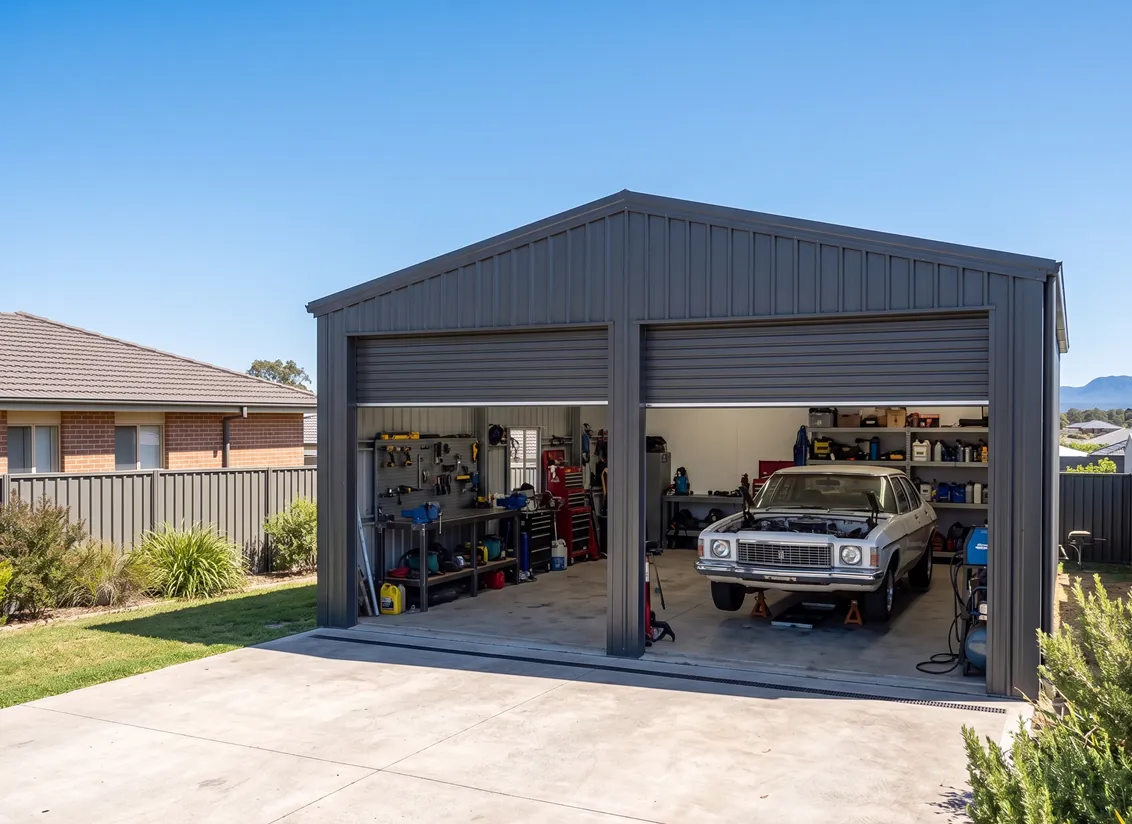
Double garage or workshop. Two vehicles with working space in between is the most common brief for residential shed builds in Western Sydney. A 9m x 6m footprint is the practical minimum, and 9m x 9m gives you genuine workshop capability alongside the vehicles. Think about workbench placement, tool storage, and whether you want a separate pedestrian door independent of the roller doors.
Machinery shed and farm workshop. Rural clients storing tractors, implements, and multi-purpose vehicles need clear-span, high-clearance buildings. Modern tractors with ROPS roll bars, excavators, and hay equipment often need 4 to 5 metre wall heights. Plan your clearance based on your tallest piece of equipment at maximum height, not what fits in the shed today.
General storage. If the primary use is storage rather than working, mezzanine floors add a second level within the same footprint and can be a cost-effective way to maximise space.
Clearance Heights: What You Actually Need
A standard passenger vehicle needs approximately 2 metres of clearance. A full-size ute or 4WD with a roof rack needs 2.4 to 2.7 metres. A caravan, motorhome, or horse float typically needs 3 metres or more. Measure your actual vehicles before committing to a roller door height.
For commercial and industrial use, 4 to 5 metre clearance is the standard minimum for forklifts and pallet racking.
Future-Proofing: Go Bigger Than You Think You Need
The incremental cost difference between a 9m x 6m shed and a 9m x 9m shed is modest relative to the total project cost. The difference in usability over a ten-year period is substantial. When sizing a shed, think about what you might want to store or do in it in five years, not just today.
Council Size Limits in NSW
In residential zones across NSW, exempt development provisions typically allow outbuildings up to a certain floor area without approval. Common limits for residential lots are in the range of 20m2 to 50m2. Structures larger than the exempt threshold need either a Complying Development Certificate or a full Development Application.
For rural and rural-residential properties, the Rural Housing Code provides more generous exempt development provisions. Some farm buildings up to 200m2 may qualify as exempt depending on zoning and lot size. Check your specific zoning before assuming which threshold applies.
Upspec Designs to Any Size
Upspec custom designs every shed. There's no catalogue of fixed sizes — every building is engineered to your site, your use, and your brief. If you're not sure what size you need, we'll talk through your use case and give you a practical recommendation. Call 1300 487 773 or request a free quote and we'll work through the brief with you.


