


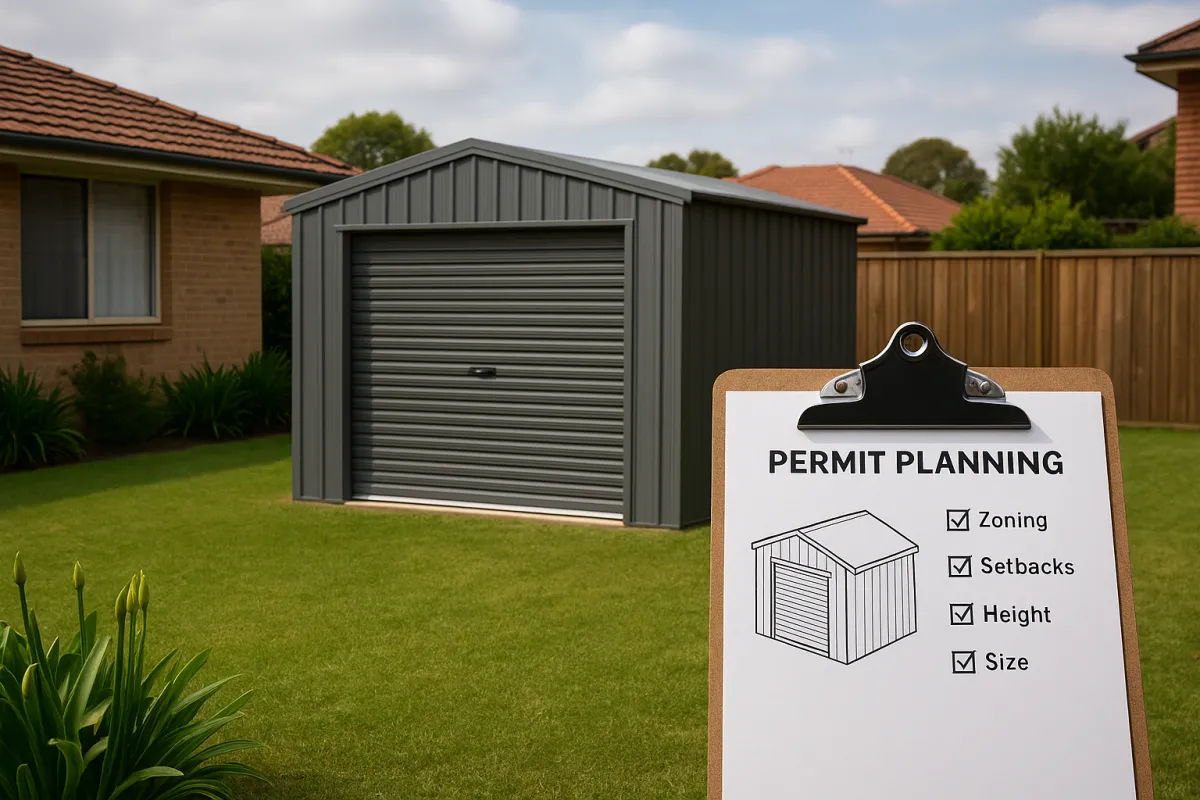
Do You Need Council Approval for a Shed in NSW? What Penrith & Western Sydney Homeowners Must Know
Do You Need Council Approval for a Shed in NSW? What Penrith & Western Sydney Homeowners Must Know
Introduction
Building a shed on your property can be exciting. But before you sign off on plans, it is essential to check whether you need approval from local authorities. In NSW, including Penrith and the wider Western Sydney region, some sheds qualify as “exempt development.” Others require a formal development application or complying development approval. This article helps you navigate the rules so you avoid fines, delays or unwanted surprises.
What is “Exempt Development” for Sheds in NSW
In NSW there is a regulatory framework that classifies some small non‑habitable structures — like garden sheds, carports or garages — as exempt from council approval if they meet certain criteria.
If your shed meets these conditions you may not need a development application or building permit.
Common requirements for exemption include:
Shed size and floor area under specified thresholds (for many sheds under 20 m² in residential zones).
Height limits — often below a certain maximum (e.g. under 3 metres or local council’s defined height) if close to boundaries.
Positioning behind the building (house) line and respecting boundary setbacks.
Non‑habitable classification — the shed is not used as a residence or living‑space.
If all conditions are met, the building may be considered exempt and proceed without formal planning approval.
When You Likely Need Council or Building Approval
Even within NSW, there are many cases where approval is required. You should assume a permit or compliance approval is needed if any of the following apply:
Shed size or floor area exceeds thresholds set for exempt developments (e.g. large garages, workshops, warehouses, or custom steel sheds).
Shed height, roof pitch or structural specifications exceed those allowed under exempt rules — especially for sheds close to property boundaries.
The shed includes plumbing, electrical, or will be used for habitation, commercial activities, or as a combined dwelling/workspace.
The property is located on a site affected by overlays (e.g. bushfire risk, flood risk, heritage, environmental zones) that impose stricter rules.
The shed is intended for commercial, industrial or large‑scale storage use — such as a workshop, warehouse or factory‑style building.
What You Should Check Before You Build
Before committing to a shed build in Penrith or Western Sydney:
Check Local Council Zoning & Regulations
Confirm if your property is residential, semi‑rural or rural
Verify lot size, boundary setbacks and if there are any overlays (e.g. bushfire, environmental)
Measure Planned Shed Size & Height
Calculate floor area (in m²) and ensure it is within exemption limits if aiming for exempt development
Confirm proposed roof height and ensure it complies with height restrictions
Decide Intended Use
If you plan to use the shed only for storage, tools or as a non‑habitable workspace, you’re more likely to qualify for exemption
If you intend to install plumbing/electrical or convert the shed to living/office space, plan for approval
Prepare Proper Documentation (if Required)
Site plan with boundaries, setbacks, easements
Engineering plans if building a larger or custom steel shed — important for compliance with building codes
Details of materials, foundations, drainage, and usage
Consult a Professional or Accredited Certifier if Unsure
Rules can vary across council areas — what qualifies as exempt in one area may not in another
Professional advice helps avoid non‑compliance and ensures structural safety
Why Understanding Approval Rules Benefits You
Avoid fines or compulsory removal — building without required approvals can lead to council orders, penalties or demolition.
Ensure structural and safety compliance — approved builds meet standards under the Building Code and local regulations.
Save time and money — knowing early helps avoid redesigns or delays when seeking permits later.
Build with confidence — helps you plan a shed that fits your needs and meets legal requirements from the start.
Conclusion
Before starting any shed build in NSW, it pays to check whether your project qualifies as exempt development or requires formal approval. For small garden sheds, garages or basic storage structures, exemption can save time and simplify the process. For larger, custom or commercial‑type steel sheds, typical of many builds in Penrith and Western Sydney, it is often necessary to obtain a council permit or complying development approval.
At Upspec Steel Buildings we’re experienced with NSW shed regulations and can guide you through approvals, design compliance and shed construction tailored to your needs.


